| CX3CL1, also known as fractalkine, is the only member of the CX3C chemokine family and is distinguished by three amino acids separating its first two conserved cysteine residues. It is synthesized as a 373-amino acid type I transmembrane protein consisting of four major domains: an N-terminal chemokine domain that mediates chemoattraction, a mucin-like stalk that supports cell adhesion, a transmembrane segment that anchors the protein to the cell surface, and a cytoplasmic domain involved in intracellular signaling. Fractalkine uniquely exhibits both chemotactic and adhesive properties, acting as a membrane-bound adhesion molecule and, upon cleavage by metalloproteinases ADAM10 and ADAM17, functioning as a soluble chemoattractant. Its receptor, CX3CR1, is a G protein-coupled receptor expressed on immune and vascular cells, including monocytes, macrophages, NK cells, T cells, and smooth muscle cells. The binding of CX3CL1 to CX3CR1 activates multiple signaling pathways, including PI3K, MAPK, AKT, Src, and eNOS, which regulate immune cell adhesion, migration, survival, and resistance to apoptosis. The CX3CL1–CX3CR1 axis is involved in key physiological processes such as immune surveillance, angiogenesis, and tissue repair, while also contributing to the pathogenesis of conditions like atherosclerosis, cancer, and neuroinflammation by promoting inflammatory cell recruitment and vascular dysfunction. Genetic variants in CX3CR1 can alter receptor activity and influence individual susceptibility to inflammatory and degenerative diseases. |

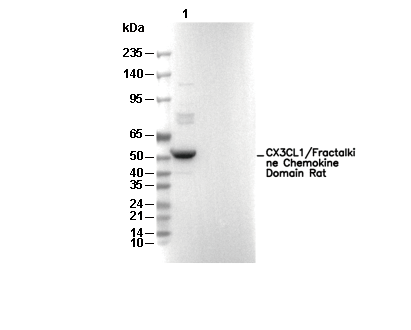 Lane 1: Mouse brain