
연구용
PD318088 MEK 억제제
제품 번호S1568
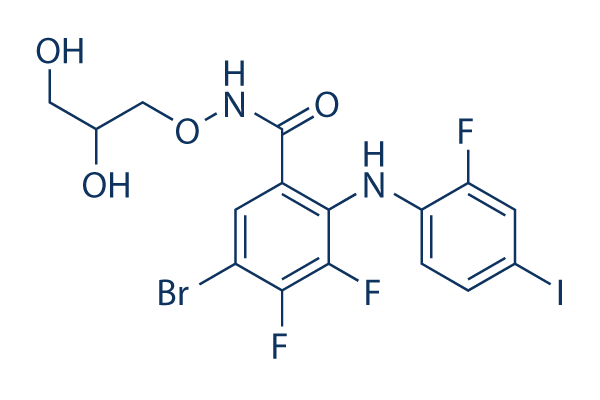
화학 구조
분자량: 561.09
품질 관리
화학 정보, 보관 및 안정성
| 분자량 | 561.09 | 화학식 | C16H13BrF3IN2O4 |
보관 (수령일로부터) | |
|---|---|---|---|---|---|
| CAS 번호 | 391210-00-7 | SDF 다운로드 | 원액 보관 |
|
|
| 동의어 | N/A | Smiles | C1=CC(=C(C=C1I)F)NC2=C(C(=C(C=C2C(=O)NOCC(CO)O)Br)F)F | ||
용해도
|
In vitro |
DMSO
: 112 mg/mL
(199.61 mM)
Ethanol : 14 mg/mL Water : Insoluble |
몰농도 계산기
|
In vivo |
|||||
생체 내 제형 계산기 (투명한 용액)
1단계: 아래 정보 입력 (권장: 실험 중 손실을 고려하여 추가 동물 포함)
2단계: 생체 내 제형 입력 (이것은 계산기일 뿐 제형이 아닙니다. 용해도 섹션에 생체 내 제형이 없는 경우 먼저 당사에 문의하십시오.)
계산 결과:
작업 농도: mg/ml;
DMSO 원액 준비 방법: mg 약물 사전 용해 μL DMSO ( 원액 농도 mg/mL, 농도가 해당 약물 배치의 DMSO 용해도를 초과하는 경우 먼저 당사에 문의하십시오. )
생체 내 제형 준비 방법: 취하다 μL DMSO 원액, 다음 추가μL PEG300, 혼합하고 투명하게 한 다음 추가μL Tween 80, 혼합하고 투명하게 한 다음 추가 μL ddH2O, 혼합하고 투명하게 합니다.
생체 내 제형 준비 방법: 취하다 μL DMSO 원액, 다음 추가 μL 옥수수 기름, 혼합하고 투명하게 합니다.
참고: 1. 다음 용매를 추가하기 전에 액체가 투명한지 확인하십시오.
2. 용매를 순서대로 추가해야 합니다. 다음 용매를 추가하기 전에 이전 추가에서 얻은 용액이 투명한 용액인지 확인해야 합니다. 와동, 초음파 또는 뜨거운 물 중탕과 같은 물리적 방법을 사용하여 용해를 도울 수 있습니다.
작용 메커니즘
| Targets/IC50/Ki |
MEK1/2
|
|---|---|
| 시험관 내(In vitro) |
PD318088은 MEK1/2의 소분자 억제제로, PD184352의 유사체이며, 암세포에 대한 상당한 항증식 활성을 가질 수 있음을 시사하지만, 현재 이 화합물에 대한 기능 연구는 없습니다. 이 억제제는 ATP 결합 부위에 인접한 MEK1 활성 부위의 영역에서 ATP와 동시에 결합합니다. 이 화학물질과 MgATP를 포함한 삼원 복합체의 형성은 MEK1 및 MEK2 모두에 대해 Kd 단량체-이량체에 대해 중간 정도의 증가(140 nM까지)를 유도합니다. 이 화합물과 MgATP가 MEK1에 결합하면 사량체 및 고차 응집체의 형성도 억제됩니다. 이 화합물과 MgATP는 함께 MEK1 및 MEK2의 이량체화 해리 상수를 ~75nM에서 ~140nM으로 약간 증가시키는데, 이는 이 분자의 억제 메커니즘이 활성 부위의 국소적인 구조 변화의 결과이며 전체 구조의 전반적인 변화는 아님을 시사합니다.
|
참조 |
기술 지원

제품은 연구용으로만 사용됩니다. 인체에는 사용하지 마십시오. 환자에게 판매하지 않습니다.
©Copyright 2013 Selleck Chemicals. All Rights Reserved.