
연구용
BMS-536924 IGF-1R 억제제
제품 번호S1012
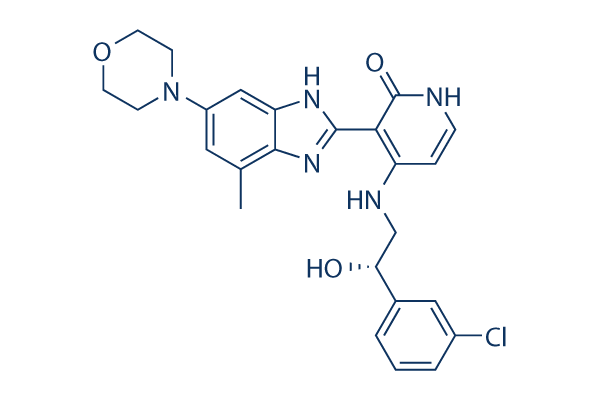
화학 구조
분자량: 479.96
품질 관리
화학 정보, 보관 및 안정성
| 분자량 | 479.96 | 화학식 | C25H26ClN5O3 |
보관 (수령일로부터) | |
|---|---|---|---|---|---|
| CAS 번호 | 468740-43-4 | SDF 다운로드 | 원액 보관 |
|
|
| 동의어 | CS-0117 | Smiles | CC1=CC(=CC2=C1N=C(N2)C3=C(C=CNC3=O)NCC(C4=CC(=CC=C4)Cl)O)N5CCOCC5 | ||
용해도
|
In vitro |
DMSO
: 96 mg/mL
(200.01 mM)
Water : Insoluble Ethanol : Insoluble |
몰농도 계산기
|
In vivo |
|||||
생체 내 제형 계산기 (투명한 용액)
1단계: 아래 정보 입력 (권장: 실험 중 손실을 고려하여 추가 동물 포함)
2단계: 생체 내 제형 입력 (이것은 계산기일 뿐 제형이 아닙니다. 용해도 섹션에 생체 내 제형이 없는 경우 먼저 당사에 문의하십시오.)
계산 결과:
작업 농도: mg/ml;
DMSO 원액 준비 방법: mg 약물 사전 용해 μL DMSO ( 원액 농도 mg/mL, 농도가 해당 약물 배치의 DMSO 용해도를 초과하는 경우 먼저 당사에 문의하십시오. )
생체 내 제형 준비 방법: 취하다 μL DMSO 원액, 다음 추가μL PEG300, 혼합하고 투명하게 한 다음 추가μL Tween 80, 혼합하고 투명하게 한 다음 추가 μL ddH2O, 혼합하고 투명하게 합니다.
생체 내 제형 준비 방법: 취하다 μL DMSO 원액, 다음 추가 μL 옥수수 기름, 혼합하고 투명하게 합니다.
참고: 1. 다음 용매를 추가하기 전에 액체가 투명한지 확인하십시오.
2. 용매를 순서대로 추가해야 합니다. 다음 용매를 추가하기 전에 이전 추가에서 얻은 용액이 투명한 용액인지 확인해야 합니다. 와동, 초음파 또는 뜨거운 물 중탕과 같은 물리적 방법을 사용하여 용해를 도울 수 있습니다.
작용 메커니즘
| Targets/IC50/Ki |
Insulin Receptor
73 nM
IGF-1R
100 nM
FAK
150 nM
MEK
182 nM
LCK
341 nM
VEGFR2
1.4 μM
EGF
1.6 μM
Met
4.87 μM
|
|---|---|
| 시험관 내(In vitro) |
BMS-536924는 또한 FAK 및 Lck를 각각 IC50 150 nM 및 341 nM로 억제합니다. 이 화합물은 세포 증식을 억제하고 Akt 및 MAPK 인산화를 방해합니다. 이는 MCF10A 세포에서 IGF-I 자극 IGF-1R 신호 전달을 억제하고 CD8-IGF-1R-MCF10A에서 구성적 IGF-1R 활성을 차단합니다. MCF10A 세포를 이 화학 물질 1 μM로 사전 배양하면 IGF-I가 IGF-1R 인산화를 자극하는 능력이 완전히 차단됩니다. IGF-I 자극은 ERK1/2, GSK3β 및 Akt의 인산화를 증가시킵니다. 이 화합물은 이러한 리간드 유도 인산화를 억제합니다. CD8-IGF-1R-MCF10A 세포를 이 억제제로 처리하면 0.01 μM 및 0.1 μM에서 부분적 억제와 함께 용량 의존적 인산화 억제가 나타나지만, 1 μM 농도에서는 완전한 수용체 억제가 나타납니다. 인산화된 IGF-1R의 최대 억제는 배양 후 10분 일찍 관찰됩니다. 이는 48시간까지 IGF-1R 인산화를 억제하는 능력을 유지합니다. 이 에이전트를 첨가하면 1시간부터 시간 의존적으로 Akt 인산화가 억제됩니다. 48시간까지 Akt 활성화는 완전히 차단됩니다. 이 화합물로 처리하면 TC32, HT1080/S, SK-LMS-1, H513 및 CTR 세포를 포함한 암세포주 패널에서 항증식 활성을 나타냅니다. pIGF-1R/pIR은 IGF-I/인슐린 자극 시 활성화되며, 이 활성화는 Rh41 및 Rh36 세포주에서 유사한 효능으로 이 화학 물질에 의해 억제됩니다. 프로그램 세포 사멸 4 (PDCD4)의 발현, 폴리(ADP-리보스) 폴리머라제 (PARP) 및 카스파제-3의 절단은 이 억제제로 처리된 Rh41 세포에서 상향 조절됩니다.
|
| 키나아제 분석 |
IGF-I 경로 활성
|
|
1 × 10⁶ pBabe-MCF10A 세포를 60mm 접시에 심습니다. 24시간 후, 배지를 혈청이 없는 배지로 교체하고 37°C에서 24시간 동안 밤새 배양합니다. 그런 다음 세포를 혈청이 없는 배지에서 1시간 동안 1uM BMS-536924 유무에 관계없이 사전 배양한 다음 IGF-I (50 ng/mL)로 10분 동안 자극합니다. 세포 단층을 PBS로 두 번 세척하고 면역블롯 분석을 위해 수확합니다.
|
|
| 생체 내(In vivo) |
BMS-536924를 100-300 mpk로 경구 투여하면 IGR-1R Sal 종양 모델을 강력하게 억제합니다. 비조작된 Colo205 인간 결장암 모델에서도 효능이 관찰됩니다. 이 화합물을 1일 1회 (100-300 mpk) 또는 1일 2회 (50, 100 mpk) 경구 투여하면 이 종양 모델에서 항종양 활성을 나타냅니다. 경구 포도당 내성 검사 (OGTT)는 100 mpk (b.i.d.)가 포도당 투여 후 포도당 수치에서 유의미한 상승을 유발함을 보여줍니다. 폴리(에틸렌 글리콜) 400 및 물 (80:20 v/v)에 경구 투여된 이 화학 물질의 약동학적 매개변수는 마우스, 랫트, 개 및 원숭이에서 결정됩니다. 모든 종에서 우수한 생체 이용률이 명백합니다. 설치류에서 p.o. 용량이 증가함에 따라 유의미한 비선형 약동학이 관찰됩니다. 이 화합물은 2주 치료 (100mg/kg) 후 CD8-IGF-1R-MCF10A 세포의 종양 이식편 부피를 76%로 감소시킵니다. 이 화학 물질 70 mg/kg을 경구 투여하면 누드 마우스에 접종된 종양 성장 (TGBC-1TKB 세포)을 유의미하게 억제합니다. 이는 이식편 종양에서 세포 사멸을 상향 조절합니다. 치료는 마우스의 체중이나 사망 시점의 포도당 수치에 adverse effects를 미치지 않아 tolerable toxicity를 시사합니다.
|
참조 |
|
기술 지원
자주 묻는 질문
질문 1:
What are the differences between it and S1034?
답변:
The most remarkable difference between these two IGF-IR inhibitors is that S1012 is an ATP-competitive inhibitor. You will get more information about the differences between IR inhibitors in this reference: http://www.sciencedirect.com/science/article/pii/S1359644605035129.

제품은 연구용으로만 사용됩니다. 인체에는 사용하지 마십시오. 환자에게 판매하지 않습니다.
©Copyright 2013 Selleck Chemicals. All Rights Reserved.